
Hemorrhoid treatment In North County San Diego
Endovascular Hemorrhoid Embolization: A Less Invasive Hemorrhoid Treatment Option
Understanding Hemorrhoids
Hemorrhoids are swollen veins in the lower rectum or anus that can cause discomfort, pain, and even bleeding. They’re often the result of increased pressure in the area, which can happen due to:
- Chronic constipation or straining during bowel movements
- Pregnancy
- Sitting for long periods
- Obesity
- A low-fiber diet
Hemorrhoids can be internal (inside the rectum) or external (under the skin around the anus). While mild cases often improve with lifestyle changes, more severe hemorrhoids may require medical treatment.
What Is Endovascular Hemorrhoid Embolization?
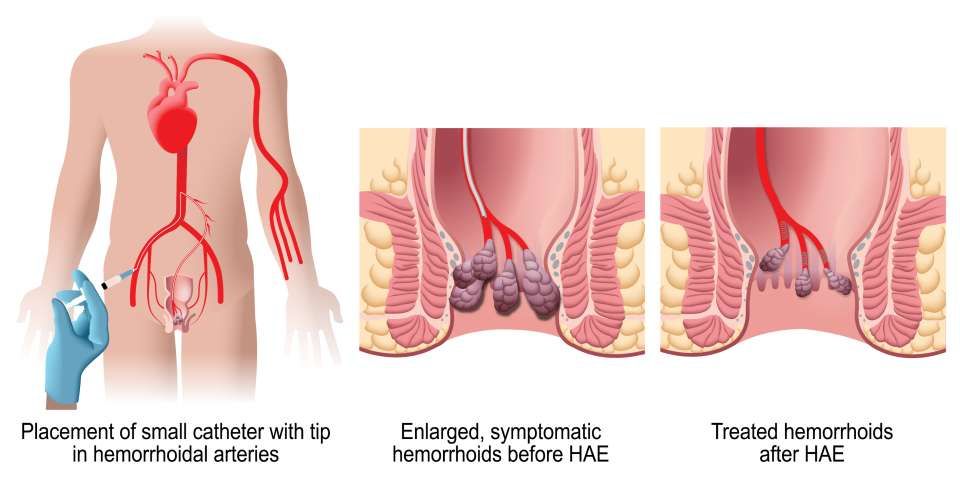
Endovascular hemorrhoid embolization (EHE) is a minimally invasive procedure designed to treat hemorrhoids by reducing the blood flow to the affected veins. By limiting the blood supply, the swollen veins shrink over time, alleviating symptoms such as pain, itching, and bleeding. Unlike traditional surgical treatments, EHE does not involve cutting or removing tissue. Instead, it uses advanced imaging technology to target the problem at its source.
Benefits of Endovascular Hemorrhoid Embolization
Is Endovascular Hemorrhoid Embolization The best hemorrhoid treatment?
EHE offers several advantages over traditional surgical treatments for hemorrhoids:
- Minimally Invasive: No incisions or cutting are required, reducing the risk of complications.
- Quick Recovery: Most patients can return to their normal activities within a day or two.
- Less Pain: Since there is no surgical removal of tissue, post-procedure pain is minimal compared to traditional hemorrhoid surgery.
- Outpatient Procedure: EHE is performed in an outpatient setting, so there’s no need for an overnight hospital stay.
- Effective Symptom Relief: By targeting the blood supply to the hemorrhoids, EHE reduces swelling and discomfort over time.
How Does the Procedure Work?
Endovascular hemorrhoid embolization is typically performed by a vascular specialist or interventional radiologist. Here’s what you can expect:
- Minimally Invasive Access: The procedure begins with a tiny puncture, usually in the groin or wrist, to access a blood vessel.
- Guided Imaging: Using advanced imaging, a catheter (a thin, flexible tube) is carefully guided to the arteries supplying blood to the hemorrhoids.
- Embolization: Tiny particles or coils are delivered through the catheter to block the blood flow to the hemorrhoidal tissue.
- Completion: Once the blood flow is reduced, the catheter is removed, and the access point is bandaged. No stitches are required.
The entire procedure is usually completed in less than an hour, and most patients go home the same day.
Is Endovascular Hemorrhoid Embolization Right for You?
EHE may be a good option if:
- Your hemorrhoids are causing persistent discomfort, bleeding, or other symptoms.
- You’ve tried lifestyle changes and other non-invasive treatments without success.
- You’re looking for a less invasive alternative to traditional hemorrhoid surgery.
It’s important to discuss your symptoms and medical history with a vascular specialist like Dr. Zakowsky to determine whether EHE is the best choice for you.
Schedule an appointment at our Fallbrook office to get started.
Hemorrhoid Treatment FAQs
What hemorrhoid treatment options are available without surgery?
For appropriate patients, hemorrhoid embolization offers a minimally invasive hemorrhoid treatment that does not require surgical removal of hemorrhoidal tissue. The procedure reduces blood flow to symptomatic internal hemorrhoids, allowing them to shrink over time.
What is hemorrhoid embolization?
Hemorrhoid embolization is a minimally invasive hemorrhoid treatment that uses a small catheter to reduce blood flow to enlarged internal hemorrhoids. It can help relieve symptoms such as persistent or recurrent rectal bleeding without traditional hemorrhoid surgery.
Is hemorrhoid embolization considered surgery?
No. This hemorrhoid treatment is performed through a small catheter inserted into a blood vessel rather than through surgical incisions or removal of hemorrhoidal tissue.
Is minimally invasive hemorrhoid treatment painful?
Hemorrhoid embolization treats the arteries supplying the hemorrhoids from inside the blood vessels, avoiding surgical treatment of the sensitive tissue around the anus. Some temporary discomfort may occur following the procedure, but recovery is generally different from traditional hemorrhoid surgery.
How long does hemorrhoid embolization take?
Procedure times vary, but hemorrhoid embolization is typically performed as an outpatient treatment, allowing patients to return home the same day.
How quickly can I return to normal activities after hemorrhoid treatment?
Recovery following hemorrhoid embolization is generally shorter than recovery from traditional hemorrhoid surgery. Many patients can return to normal daily activities relatively quickly, depending on their individual circumstances and their physician's recommendations.
What hemorrhoid symptoms can embolization treat?
Hemorrhoid embolization is primarily used as a treatment for symptomatic internal hemorrhoids, particularly when persistent or recurrent rectal bleeding is a major concern.
Can hemorrhoid embolization treat external hemorrhoids?
Hemorrhoid embolization targets the arterial blood supply associated with internal hemorrhoids and is not generally used as a primary treatment for external hemorrhoids. An evaluation can determine what type of hemorrhoids you have and which hemorrhoid treatment may be appropriate.
Who is a good candidate for hemorrhoid embolization?
Patients with symptomatic internal hemorrhoids who haven't received adequate relief from conservative hemorrhoid treatments, or who want to explore an alternative to traditional surgery, may be candidates. A medical evaluation is necessary to determine whether embolization is appropriate.
How is hemorrhoid embolization different from traditional hemorrhoid surgery?
Traditional hemorrhoid surgery may involve cutting or removing hemorrhoidal tissue. Hemorrhoid embolization instead reduces blood flow through the arteries supplying the hemorrhoids, allowing them to shrink without surgical removal.
How is hemorrhoid embolization different from rubber band ligation?
Rubber band ligation treats an internal hemorrhoid directly by placing a small band around it to restrict its blood supply. Embolization approaches hemorrhoid treatment through the arteries supplying the hemorrhoids and does not require treatment of the hemorrhoid from within the rectum.
Can hemorrhoids come back after treatment?
No hemorrhoid treatment can guarantee that symptoms will never return. Lifestyle factors, constipation, straining, and other underlying issues can contribute to recurring hemorrhoids or symptoms.
Does insurance cover hemorrhoid treatment?
Insurance coverage for hemorrhoid treatment varies depending on your insurance provider, plan, medical necessity, and the specific procedure being performed. Our office can help determine your benefits and discuss coverage before treatment.
Do I need a referral for hemorrhoid treatment?
A referral may not be necessary depending on your insurance coverage. Contact California Vascular Health Specialists directly, and our team can help determine the requirements for your plan.
How do I know if rectal bleeding is caused by hemorrhoids?
Rectal bleeding should not automatically be assumed to be caused by hemorrhoids. Several gastrointestinal conditions can cause similar symptoms, so proper medical evaluation is important before beginning hemorrhoid treatment.
Where can I find minimally invasive hemorrhoid treatment in North County San Diego?
California Vascular Health Specialists offers endovascular hemorrhoid embolization in Fallbrook for appropriate patients seeking a minimally invasive alternative to traditional hemorrhoid treatment. Contact our office to schedule an evaluation and learn whether hemorrhoid embolization may be right for you.